i was responsible for three days i could not pause
The buttons I am used to
Most of what I do happens in a text editor. When something breaks, I find the bug and fix it. When a design is wrong, I change it. When I deploy something and it behaves unexpectedly, I can roll back. There is always a way to stop, think, and try again.
Then I was handed the event program for Bali Startup Camp 2025, and I realized none of those buttons existed.
What I was actually handed
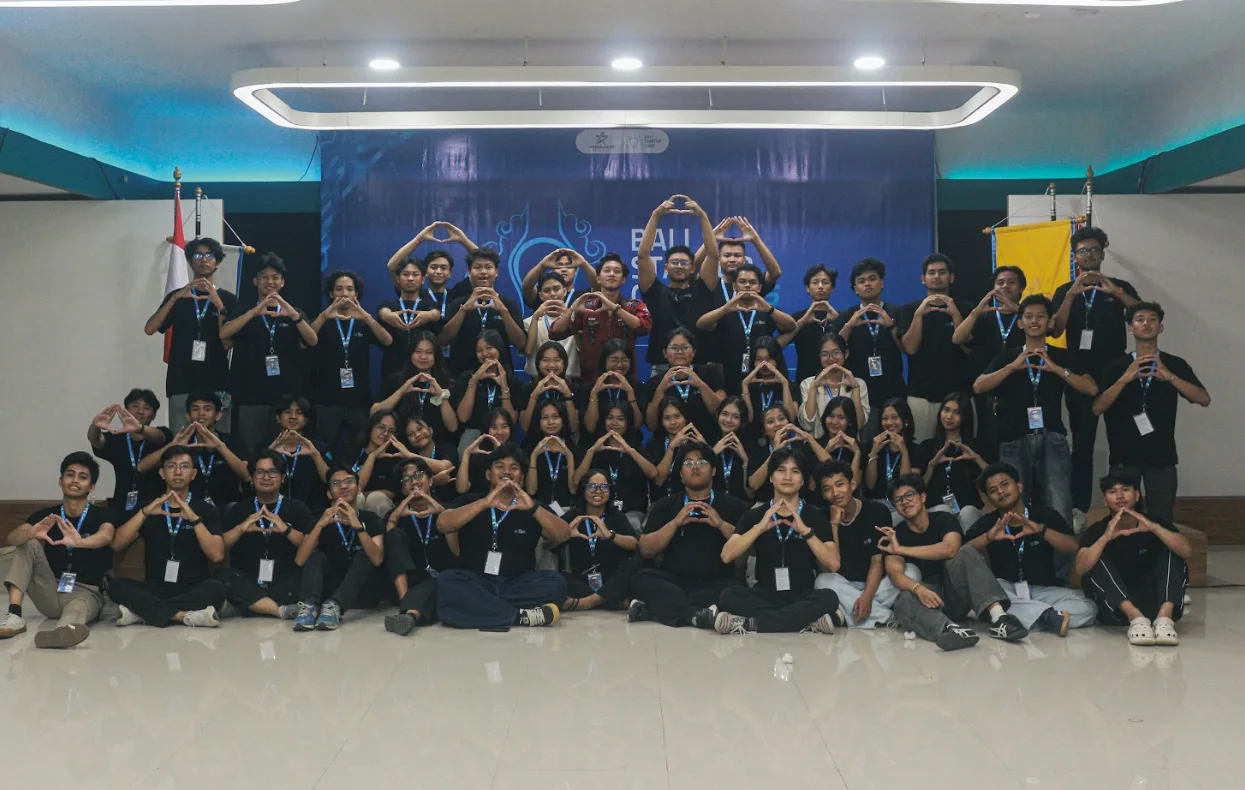
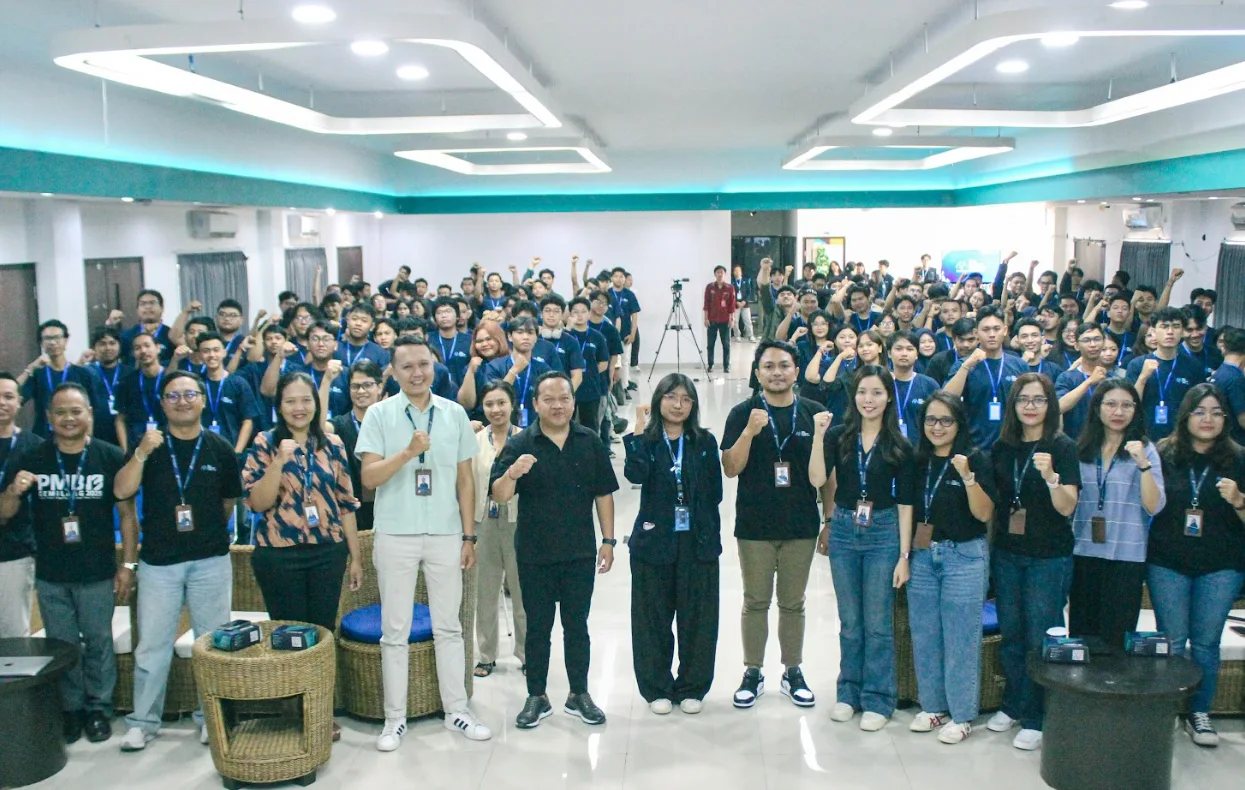
Bali Startup Camp is a 3-day startup acceleration event organized by HIMA Informatika at Primakara University, aimed at helping students go from a raw idea to a pitch they can stand behind. The theme this year was “First Step to Real Impact.” I joined the 56-person organizing committee as Koordinator Divisi Acara, which meant I owned the event program and its flow. Not the logistics, not the food, not the budget. The schedule. What happens, in what order, for how long, and in front of whom.
171 students registered. 35 startup teams would pitch on the final day. My job was to make sure the three days before that pitch actually prepared them.
The program had to be a learning arc
The hardest thing about designing the program was resisting the urge to treat it as a list of sessions. If you just fill the hours, you get an event that feels exhausting. If you think about the arc, you get something that moves people forward.
Day one was for the idea. Students went through a workshop on how to excavate a real problem from a startup concept, then moved into mentoring rooms with practitioners who pushed them to validate whether the problem was real. Day two was for the prototype. A second workshop on developing and testing a prototype was followed by another mentoring round where teams refined what they had built. Day three was the pitch. After the final mentoring session on business model and strategy, 35 teams walked up to present in front of three judges and an audience.
That arc was the design. Workshop to surface the thinking, mentoring to deepen it, pitching to prove it. Twelve mentors, three workshops, three judges, sharing sessions with founders. All of it had to fit inside roughly twenty-four hours of program time across three days.
The real work was people and time
Until Bali Startup Camp, most of what I coordinated was code. Functions, dependencies, build steps. Things that behave exactly the way they are told.
People do not behave that way. A speaker runs long because the audience asks good questions. A mentor gets held up between rooms. The sponsor segment needs five more minutes. The MC needs to fill a gap that was not on the schedule. The whole rhythm of an event depends on dozens of people making small decisions in real time, and the program coordinator is the one holding the overall shape together while all of it happens.
I learned that coordinating people is not like coordinating modules. You cannot call a function and expect the right return value. You have to communicate, adjust, and trust the people around you to do the same.
The rundown did not survive first contact
We planned the Day 1 opening ceremony to end at 09:15. It ran five minutes over. The first workshop ran ten minutes long. A mentoring session on Day 2 ran twenty-one minutes longer than planned. The schedule I had built minute by minute started drifting almost immediately, and it kept drifting.
In software, when something goes wrong, you stop the process. You look at the logs, trace the failure, fix it, and restart. None of that was available to me. The event was live. People were in rooms. The program kept moving whether I was ready or not. I had to absorb each delay, figure out which sessions had flex built in, compress where I could, and keep the shape of the day intact without anyone in the audience noticing that anything had changed.
That was the most disorienting part of the whole three days. Not because it was catastrophic, it was not, but because I was so used to being able to stop and think before acting.
I called everyone together at lunch
The first pitching session did not go the way I had planned it. There was miscommunication between members running different parts of the floor, and by the time the first set of teams had finished, people were visibly frustrated with each other. The kind of frustration that shows in short answers and avoided eye contact. We had another session starting in sixty minutes with twenty teams still to pitch.
I could not let session two start like that.
During the lunch break, I pulled together everyone involved in running the event floor. Not to assign blame, but to be honest about what had broken down and figure out together what had to change. We went through the specific moments where communication had failed. We agreed on what each person would own for the second session and how we would signal each other when something needed adjusting. By the time people finished eating, the tension had settled into something more like focus.
Session two ran from start to finish without friction. The remaining twenty teams pitched cleanly, and the awarding ceremony closed the day the way it was supposed to.
I had not planned for any of that. There was no item on the rundown that said “resolve committee conflict during lunch.” But that conversation was probably the most consequential thing I did across the three days. Managing time and sessions is the visible work of an event coordinator. Keeping the team functional when it is starting to come apart is the work that actually decides whether the event gets there at all.
What I want to learn next
I handled the slippage, but not as cleanly as I would have liked. Most of my adjustments were reactive. I was absorbing delays as they happened instead of having a clear set of contingency decisions I had already made in advance.
The lunch conversation worked, but it worked because I had enough time and the situation had not spread further. What I want to get better at is reading team friction earlier, before it becomes visible, and having that conversation before a session breaks rather than after. I had not seen the miscommunication building during session one. I only recognized it when it was already a problem.
Real facilitation under pressure is a skill I do not have yet. Bringing people together that day was the right call, but I was making it up as I went. I want to develop a clearer sense of how to run that kind of conversation in a way that actually resolves things rather than just temporarily smoothing them over. And I want to build better contingency into a schedule at design time, so the space for those conversations exists before something breaks.
The three days that happened anyway
On the final afternoon of Day 3, thirty-five teams pitched. OneTap won first place. Cetakuy took second. Ngaksa.tech came in third.
I watched those three teams walk up and thought about the path from Day 1. The idea sessions, the prototype feedback, the business model mentoring. Whether the program actually accelerated their thinking or whether they would have gotten there anyway, I cannot say for certain. But 171 students showed up every day, and most of them stayed all the way through to the closing ceremony.
The theme was “first step to real impact.” I think about it differently now than I did before. In software, I ship something and I can see almost immediately whether it runs. An event is different. You design an experience for people, you run it once, and what they take from it is not yours to inspect. You just have to build the best arc you can and trust that something lands.